Your supplement images are costing you sales right now. Every day your listing sits there with mediocre product photography, you’re hemorrhaging money to competitors who understand image strategy. The supplement category on Amazon is brutal. With over 80,000 active listings competing for attention, your images either grab browsers by the throat or get scrolled past into oblivion.
Here’s the math that should wake you up: A 2% improvement in conversion rate on a supplement doing $50K monthly revenue adds $12K annually to your bottom line. Bad images don’t just hurt conversions. They kill your organic ranking, spike your ACoS, and make your PPC campaigns burn cash faster than you can add keywords.
These supplement product photography tips will fix that problem. We’ll walk through the exact process that moves browsers from scroll-past to add-to-cart, backed by real conversion data from supplement sellers who stopped treating images like an afterthought.
Understanding Amazon’s Image Requirements for Supplements
Technical Specifications That Actually Matter
Amazon’s image requirements aren’t suggestions. They’re ranking factors that directly impact your listing’s visibility in search results. Your main image needs to be exactly 1000×1000 pixels minimum, but smart supplement sellers upload at 2000×2000 pixels for zoom functionality that increases time-on-listing by an average of 23%.
File format matters more than most sellers realize. JPEG images compress smaller and load faster, which impacts mobile conversion rates. PNG files maintain better quality but slow down page load times. For supplement photography, use JPEG for lifestyle images and PNG only when you need transparent backgrounds for A+ Content.
Color space is where most sellers screw up without knowing it. Amazon’s image processing system expects sRGB color space. Upload images in Adobe RGB or ProPhoto RGB, and your colors will look washed out compared to competitors. That vibrant orange vitamin C bottle becomes a pale, sickly yellow that screams “cheap knockoff” to potential buyers.
Main Image Rules That Kill Rankings
Your main image determines your click-through rate from search results. Period. Amazon’s A10 algorithm weighs CTR heavily in organic ranking decisions. A main image that generates 8% CTR instead of 5% can move you from page 2 to page 1 within weeks.
The 85% rule isn’t negotiable for supplement main images. Your product must fill at least 85% of the image frame. But here’s what Amazon doesn’t tell you: 90-95% fill rate performs better for supplements because it shows bottle size and label details clearly. Customers buying vitamins want to see exactly what they’re getting.
White background means pure white – RGB 255, 255, 255. Not off-white, not cream, not “close enough.” Amazon’s image crawlers detect color variations and can suppress listings that don’t meet exact specifications. Use a proper white background, not Photoshop’s “close enough” white balance.
Secondary Image Slot Strategy
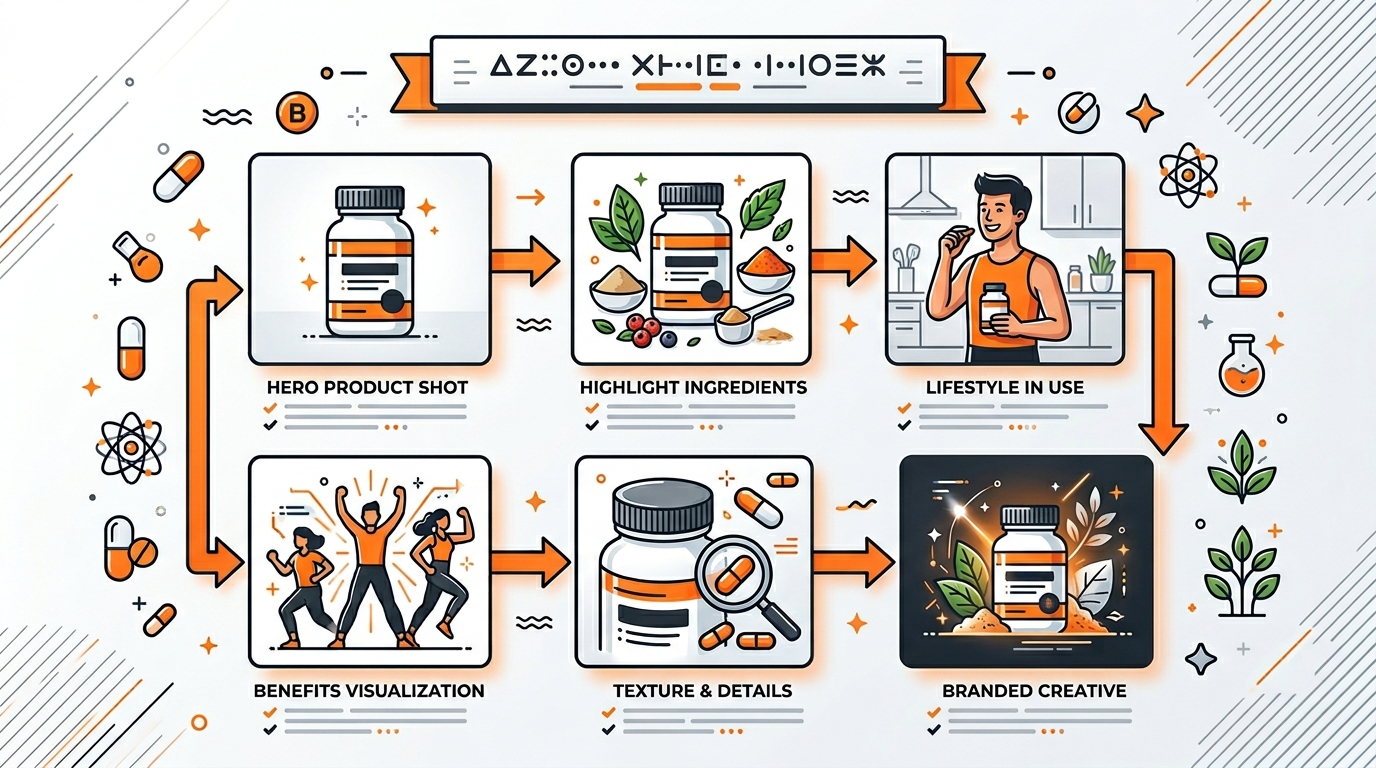
Most supplement sellers waste their 7 image slots on random product angles that add zero value. Smart sellers use a proven slot sequence that addresses specific buyer objections and pushes conversion rates above 15%.
Slots 2-3 should focus on label transparency. Supplement Facts panel in slot 2, ingredients list in slot 3. These images convert skeptical browsers into buyers by providing the detailed information that builds trust. Use lifestyle context in slots 4-5, and save comparison charts for slots 6-7.
File naming impacts discoverability more than Amazon admits. Use descriptive filenames that include your main keyword: “vitamin-d3-5000iu-softgels-main.jpg” performs better than “IMG_001.jpg” in Amazon’s image search algorithms. Alt text should mirror your filename structure for maximum SEO impact.
Setting Up Your Supplement Photography Workspace
Lighting Setup That Eliminates Shadows
Bad lighting is the fastest way to make premium supplements look like gas station knockoffs. Harsh shadows, uneven illumination, and color casts destroy conversion rates faster than negative reviews. Professional supplement photography requires controlled, consistent lighting that shows products accurately.
Three-point lighting is the foundation of professional supplement photography. Key light at 45 degrees provides primary illumination. Fill light at opposite 45-degree angle eliminates harsh shadows. Rim light from behind separates the product from background and creates depth that makes bottles pop on mobile screens.
Color temperature consistency across all images is non-negotiable. Mix 3200K tungsten with 5500K daylight, and your product colors will shift between images. Customers notice. They assume color inconsistency means quality control problems with the actual product. Use LED panels with adjustable color temperature, locked at 5500K for all shots.
Softbox size matters for supplement bottles. 24×24 inch softboxes create too much contrast for cylindrical products. 36×48 inch softboxes provide even illumination across the entire bottle surface. Strip lights work better for tall, narrow bottles. Umbrella lighting creates hot spots that blow out label details.
Background Selection and Setup
White seamless paper looks amateur compared to proper cyclorama setups. Seamless paper creates visible horizon lines that break the illusion of infinite white space. Invest in a proper curved backdrop or build a cyc wall that eliminates the background seam completely.
Reflector placement controls shadow density and product dimensionality. Silver reflectors create harsh, contrasty fill light that makes plastic bottles look cheap. White foam core provides gentle fill that maintains product texture and label readability. Gold reflectors warm up skin tones in lifestyle shots but make supplement bottles look yellowed and old.
Background contamination kills conversion rates. Dust specs, lint, and color casts that seem invisible during shooting become glaringly obvious in final images. Clean backgrounds obsessively. Check every shot at 100% magnification before moving to the next angle. Retouching background contamination costs more time than preventing it.
Camera Settings and Equipment Requirements
Aperture selection balances sharpness with depth of field for supplement photography. f/8 to f/11 provides maximum sharpness for most lenses while keeping entire product in focus. Wider apertures blur important label information. Smaller apertures introduce diffraction that reduces overall image quality.
ISO 100 is mandatory for supplement product photography. Higher ISOs introduce noise that makes products look grainy and unprofessional. Use more lighting instead of higher ISO. Grain-free images at 100% crop communicate quality and attention to detail that builds buyer confidence.
Shutter speed becomes critical for lifestyle supplement photography with models. Minimum 1/125 second eliminates camera shake. For handheld products, use 1/250 second minimum. Motion blur in supplement images suggests low quality and poor attention to detail. Customers associate sharp images with product quality.
Macro lens capabilities matter for supplement label photography. 1:1 reproduction ratio allows extreme close-ups of Supplement Facts panels and ingredient lists. These detail shots convert comparison shoppers who want to verify potency, purity, and third-party testing information before purchase.
Shooting Techniques for Different Supplement Types
Bottle and Container Photography
Cylindrical supplement bottles require specific shooting angles to avoid distortion and maximize label visibility. Straight-on shots flatten the bottle shape and hide dimensionality. 15-degree rotation from center shows bottle depth while keeping front label square to camera. 30-degree rotation works for bottles with wraparound labels.
Reflection management separates professional supplement photography from amateur snapshots. Polarizing filters eliminate reflections from plastic bottles and metallic caps. Without proper reflection control, bottle surfaces become mirrors that reflect your lighting setup instead of showing the actual product.
Cap and seal photography builds trust by showing tamper-evident packaging and quality control measures. Tight crops on safety seals, expiration dates, and lot numbers communicate freshness and regulatory compliance. These detail shots reduce return rates by setting accurate expectations about product condition.
Label angle consistency across all product variations maintains brand coherence in search results. If your main vitamin D bottle shows the label at 15 degrees left rotation, every other product in your supplement line should match that angle. Inconsistent angles make your brand look disorganized and unprofessional.
Powder and Scoop Photography
Protein powder photography requires specific techniques to show texture and mixing properties without creating mess. Use clear mixing bowls to demonstrate solubility. Show powder texture through strategic lighting that highlights particle size and consistency. Clumpy, poorly lit powder suggests moisture contamination and storage problems.
Scoop sizing validation reduces customer complaints about serving measurements. Include common reference objects like quarters or measuring spoons to show actual scoop size. Customers frequently complain that scoops look bigger in photos than in person. Accurate size representation prevents negative reviews and returns.
Powder color accuracy impacts perceived quality and flavor expectations. Chocolate protein powder that looks gray instead of rich brown suggests artificial ingredients and poor taste. Use color-corrected lighting and monitor calibration to ensure powder colors match customer expectations based on flavor descriptions.
Texture detail shots work especially well for specialty powders like collagen and greens supplements. Macro photography that shows powder fineness communicates mixability and quality. Rough, chunky textures suggest poor processing. Fine, uniform textures indicate premium manufacturing and better dissolution properties.
Capsule and Tablet Close-ups
Individual capsule photography showcases fill quality and manufacturing consistency. Clear capsules should show uniform powder distribution without gaps or settling. Opaque capsules require lighting that shows smooth surfaces without scratches or imperfections that suggest quality control issues.
Size comparison shots address customer concerns about swallowing difficulty. Include common reference objects like pennies, rice grains, or standard capsule size charts. Large supplement capsules often receive complaints about being “horse pills.” Accurate size representation manages expectations and reduces returns.
Coating and finish quality becomes visible under proper lighting. Enteric coatings should appear smooth and uniform. Damaged coatings suggest storage problems and reduced effectiveness. Time-release tablets require specific lighting angles to show coating integrity and surface quality.
Tablet scoring and breaklines need clear documentation for customers who need to split doses. Sharp macro photography shows precise scoring that enables clean breaks. Poorly defined score lines suggest manufacturing problems and difficulty with dose adjustment.
Lifestyle and Context Photography for Supplements
Model Selection and Direction
Model demographics directly impact supplement conversion rates based on target customer identification. Vitamin D supplements for seniors convert better with models over 50. Pre-workout supplements need fitness models who look like they actually train. Mismatched model demographics create disconnect that kills conversion rates.
Lifestyle authenticity matters more than perfect lighting in supplement context shots. Staged gym photos with pristine equipment and perfect lighting look fake. Real workout environments with natural lighting build credibility. Customers want to see supplements used by people who look like them in environments they recognize.
Hand positioning and product interaction should look natural and purposeful. Models awkwardly holding supplement bottles like props destroy believability. Show actual consumption: opening bottles, measuring powder, mixing drinks. These action shots create mental ownership and increase purchase intent.
Facial expressions communicate product satisfaction and effectiveness. Forced smiles and obvious posing reduce trust. Capture genuine moments: concentration during workouts, satisfaction after mixing, confidence before training. Authentic expressions build emotional connection that drives supplement purchases.
Environment and Prop Selection
Kitchen environments work best for daily supplement photography. Clean, modern kitchens suggest health-conscious lifestyles that align with supplement usage. Cluttered or outdated kitchens create negative associations with product quality and effectiveness.
Gym settings require authentic equipment and realistic lighting. Commercial gym equipment looks more credible than home gym setups for performance supplements. Natural gym lighting with slight color temperature variation looks more authentic than perfectly balanced studio lighting.
Prop selection should reinforce supplement benefits without overwhelming the product. Measuring cups and scales work for weight management supplements. Workout equipment complements performance products. Fresh fruits and vegetables enhance vitamin and antioxidant supplements. Props should support the story, not compete for attention.
Seasonal contexts can boost conversion rates for specific supplement categories. Vitamin D photography with sunny outdoor scenes reinforces the sunshine vitamin connection. Immune support supplements work well with fall/winter seasonal cues. Seasonal relevance increases click-through rates from search results.
Action Shots and Usage Scenarios
Mixing and preparation shots demonstrate ease of use for powder supplements. Show smooth mixing with minimal foam for protein powders. Demonstrate clear dissolution for BCAAs and pre-workouts. Poor mixing characteristics visible in photos suggest formulation problems and unpleasant consumption experience.
Before, during, and after workout sequences tell complete stories about supplement timing and effectiveness. Pre-workout supplements need energy and focus cues. Post-workout products require recovery and satisfaction messaging. Proper timing context educates customers and improves usage compliance.
Daily routine integration shows how supplements fit into normal lifestyles. Morning vitamin routines, post-meal digestive enzymes, bedtime magnesium supplementation. These contextual shots help customers visualize product adoption and build purchase confidence.
Results-oriented photography implies effectiveness without making health claims. Before/after body composition changes, improved workout performance, better sleep quality. Visual storytelling that suggests benefits without explicit health claims navigates Amazon’s supplement policy restrictions while building purchase motivation.
Post-Processing and Editing Workflow

Color Correction and White Balance
Color accuracy in supplement photography directly impacts perceived product quality and brand trust. Vitamin bottles that shift color between images suggest inconsistent manufacturing or quality control problems. Establish color correction workflows that maintain consistency across all product variations and image slots.
White balance correction should prioritize label readability over artistic color grading. Warm color casts make supplement labels look yellowed and aged. Cool casts suggest artificial or synthetic ingredients. Neutral white balance maintains product authenticity and builds customer confidence in quality control.
Monitor calibration becomes critical for supplement brands with multiple product variations. Uncalibrated monitors create color variations that become obvious when customers view multiple products side-by-side in search results. Professional monitor calibration ensures color consistency across your entire supplement line.
Color space conversion workflow prevents color shifts during Amazon upload processing. Work in sRGB color space throughout the editing process. Convert from wider gamut color spaces only at the final export stage. Color space mismatches create unpredictable color shifts that make your products look different from competitors.
Retouching and Enhancement Techniques
Label enhancement improves readability without crossing into false advertising territory. Sharpen text elements that appear soft due to depth of field limitations. Remove dust, fingerprints, and minor scratches that don’t represent the actual product condition. Avoid enhancement that changes product appearance substantially.
Background cleanup eliminates distractions that reduce conversion rates. Remove dust specs, color casts, and minor imperfections that draw attention away from the product. Perfect backgrounds communicate attention to detail and quality consciousness that builds brand trust.
Reflection and highlight management requires subtle touch. Completely eliminate reflections, and plastic bottles look flat and artificial. Maintain subtle reflections that show product dimensionality without creating distracting hot spots. Balance realism with commercial appeal.
Edge refinement separates amateur from professional supplement photography. Clean, precise product edges against white backgrounds require careful masking and refinement. Soft or poorly defined edges make products look like they’re floating or poorly integrated with backgrounds.
Final Export Settings for Amazon
JPEG quality settings balance file size with image quality for Amazon’s platform requirements. Quality level 10-12 in Photoshop provides optimal balance for supplement photography. Lower settings introduce compression artifacts that reduce perceived quality. Higher settings create unnecessarily large files that slow page load times.
Sharpening workflow should prioritize web viewing over print output. Apply output sharpening specifically calibrated for screen viewing at 72 DPI. Over-sharpening creates haloing artifacts that look unprofessional on mobile devices. Under-sharpening makes products look soft and low-quality compared to competitors.
File size optimization impacts mobile loading speeds that directly affect conversion rates. Target 150-200KB for main images, 100-150KB for secondary images. Larger files create loading delays that increase bounce rates. Smaller files may sacrifice quality that reduces purchase confidence.
Metadata inclusion improves discoverability in Amazon’s image search functions. Include relevant keywords in EXIF data and color space information. Remove camera-specific metadata that serves no commercial purpose. Optimized metadata helps Amazon’s algorithms categorize and serve your images appropriately.
Testing and Optimizing Your Supplement Images
A/B Testing Image Variations
Split testing supplement images requires systematic approach that isolates variables for accurate results. Test one element at a time: background color, product angle, lifestyle context, or text overlays. Testing multiple variables simultaneously creates inconclusive results that waste time and money.
Sample size requirements for meaningful image testing depend on your current traffic and conversion rates. Products with less than 100 daily page views need longer testing periods to achieve statistical significance. Products with higher traffic can generate actionable results within 7-14 days of testing.
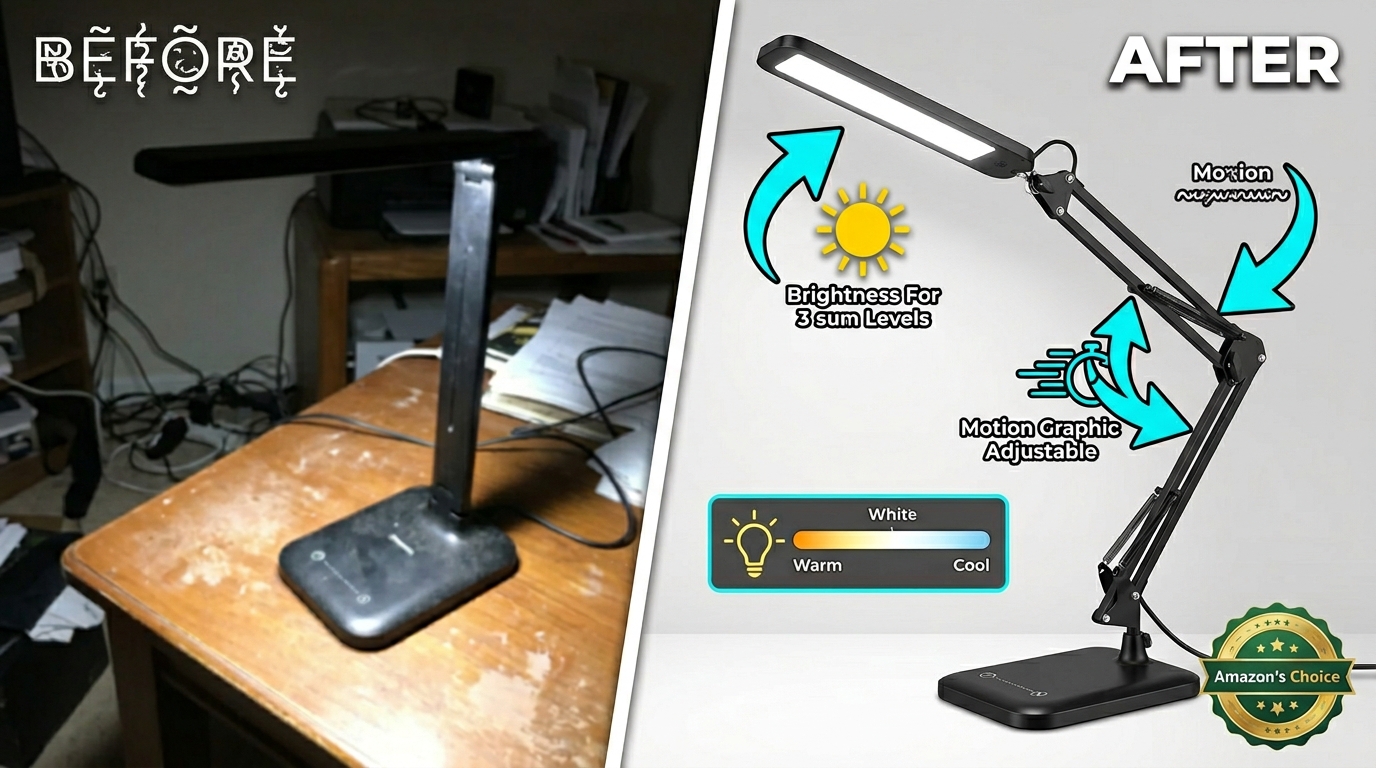
Conversion rate improvements from image optimization typically range from 15-40% for supplement products. Test results that show improvements under 10% may not be statistically significant given normal conversion rate variation. Focus testing efforts on variations that show potential for substantial improvement.
Seasonal testing considerations become important for supplement categories with cyclical demand. Immune support supplements may test differently in fall versus spring. Weight management products show different image preferences during January versus summer months. Time testing periods to align with relevant demand cycles.
Conversion Rate Analysis
Image-specific conversion tracking requires Amazon Brand Analytics data combined with click-through rate monitoring. Compare conversion rates before and after image updates to isolate performance impact. Account for external factors like seasonality, competitor actions, and price changes that affect conversion independently.
Mobile versus desktop image performance often varies significantly for supplement products. Mobile users focus more heavily on main images and scroll through secondary images less frequently. Desktop users examine detail shots and ingredient panels more thoroughly. Optimize image strategy for your primary traffic source.
Time-on-listing metrics indicate image engagement quality beyond basic conversion rates. Longer viewing times suggest images that build confidence and answer customer questions effectively. Short viewing times with high bounce rates indicate images that create confusion or fail to communicate value propositions.
Review analysis helps identify image-related customer satisfaction issues. Complaints about products looking different from photos indicate color accuracy or size representation problems. Positive mentions of packaging, labeling, or product appearance validate image accuracy and quality representation.
Competitive Image Analysis
Regular competitor image audits reveal market trends and optimization opportunities. Monitor top-ranking competitors monthly for image strategy changes, new lifestyle contexts, or technical improvements. Competitive intelligence helps identify emerging best practices before they become market standards.
Price point positioning through image quality creates market differentiation for supplement brands. Premium-priced products need consistently higher image quality to justify cost differences. Budget products can use simpler image strategies while maintaining technical excellence for credibility.
Market share analysis based on image quality reveals correlation between visual presentation and sales performance. Brands with consistently professional images typically maintain higher market share within specific supplement categories. Poor image quality correlates with declining market position over time.
Trend identification through competitor analysis helps predict effective image strategies before market saturation. Early adoption of effective visual trends provides competitive advantages before they become standard practice. Late adoption requires superior execution to achieve similar results.
Scaling Your Supplement Photography Production
Workflow Systematization
Batch shooting reduces per-product costs and maintains consistency across supplement product lines. Group products by lighting setup requirements, background needs, and prop selections. Shoot all similar products during single sessions to amortize setup costs and maintain visual coherence.
Template-based editing workflows accelerate post-processing while maintaining quality standards. Create Photoshop actions and Lightroom presets that standardize color correction, background cleanup, and export settings. Standardized workflows reduce editing time by 60-70% while improving consistency.
Quality control checklists prevent image mistakes that require expensive reshoots. Verify technical specifications, label readability, color accuracy, and background cleanliness before finalizing images. Systematic quality control reduces revision requests and maintains production schedules.
Asset organization systems become critical for supplement brands with multiple product variations and seasonal updates. Implement file naming conventions that include product codes, image types, and version numbers. Organized asset libraries prevent confusion and enable efficient updates.
Team Building and Training
In-house photography capabilities provide long-term cost advantages for supplement brands with regular product launches. Training costs for competent product photographers typically pay back within 6-12 months compared to ongoing agency fees. In-house teams understand brand requirements and maintain consistent visual standards.
Outsourcing considerations include cost per image, turnaround time, and quality consistency. Professional photography services cost $50-100 per edited image for supplement products. High-volume brands may negotiate package pricing that reduces per-image costs while maintaining quality standards.
Freelancer management requires clear specifications and quality standards to achieve consistent results. Provide detailed shot lists, technical requirements, and brand guidelines. Inconsistent freelancer management creates visual inconsistency that damages brand perception and conversion rates.
Training documentation should cover technical requirements, brand standards, and quality expectations. Written guidelines prevent miscommunication and enable consistent results across multiple team members or vendors. complete training reduces revision cycles and maintains production efficiency.
Automation and Technology Integration
Automated background removal tools can accelerate workflow for simple supplement bottle photography. AI-powered tools like Remove.bg handle basic background removal effectively. Complex products with reflective surfaces or transparent elements still require manual masking for professional results.
Color management systems ensure consistency across multiple photographers and editing workstations. Calibrated monitors, standardized lighting equipment, and color-managed workflows prevent variations that become obvious in final product listings.
Asset management platforms organize large supplement product catalogs and enable efficient updates. DAM systems with automatic tagging and search capabilities reduce time spent locating specific images for updates or variations.
Integration with Amazon seller tools automates image uploads and optimization tasks. Tools that automatically resize, compress, and format images for Amazon’s requirements reduce manual work and prevent technical errors that affect listing performance.
Related Articles
- DIY Amazon Product Photography Setup: Build a $200 Studio That Gets Results
- Product Photography Lighting for Amazon: Step-by-Step Setup Guide for Professional Results
- Amazon Product Photography Pricing Breakdown: What Actually Drives ROI in 2024
Frequently Asked Questions
What camera equipment do I need for professional supplement photography?
A DSLR or mirrorless camera with macro lens capabilities provides the foundation for supplement product photography. Canon EOS R6 or Sony A7 IV offer excellent image quality with 1:1 macro reproduction ratios needed for label detail shots. Pair with 85mm or 100mm macro lenses for optimal working distance and minimal distortion. LED light panels with adjustable color temperature eliminate the color casts that make supplement bottles look cheap and unprofessional.
How many images should I use for supplement listings on Amazon?
Use all 7 available image slots for supplement products to maximize conversion rates and reduce ACoS. Slot 1 for main product image, slots 2-3 for label details and Supplement Facts panels, slots 4-5 for lifestyle context and usage scenarios, and slots 6-7 for comparison charts or additional product angles. Supplement buyers research extensively before purchase, and complete image sets that answer questions reduce bounce rates and improve organic ranking performance.
What’s the biggest mistake supplement sellers make with product photography?
Poor lighting that creates harsh shadows and color casts destroys perceived quality faster than any other factor. Supplement bottles photographed with single-point lighting look amateur and suggest low-quality manufacturing. Invest in proper three-point lighting setup with softboxes that eliminate shadows and show true product colors. Color accuracy becomes especially important for supplements where customers associate specific colors with potency and purity levels.
Should I hire a professional photographer or shoot supplements myself?
Calculate the decision based on product volume and revenue per listing. Supplement brands with fewer than 10 SKUs and under $500K annual revenue typically achieve better ROI with professional photography services. Brands with larger catalogs and frequent product launches benefit from in-house capabilities after initial equipment investment. Professional supplement photography costs $400-800 per product but pays back through improved conversion rates within 30-60 days for products generating meaningful sales volume.
How do I make my supplement images stand out from competitors?
Focus on lifestyle integration and authentic usage scenarios rather than perfect studio shots that look identical to every other supplement brand. Show your products being used by real people in genuine environments that your target customers recognize. Authentic lifestyle photography builds emotional connection and purchase intent that sterile product shots cannot achieve. Combine technical excellence in main images with storytelling in secondary images to address both logical and emotional buying motivations.