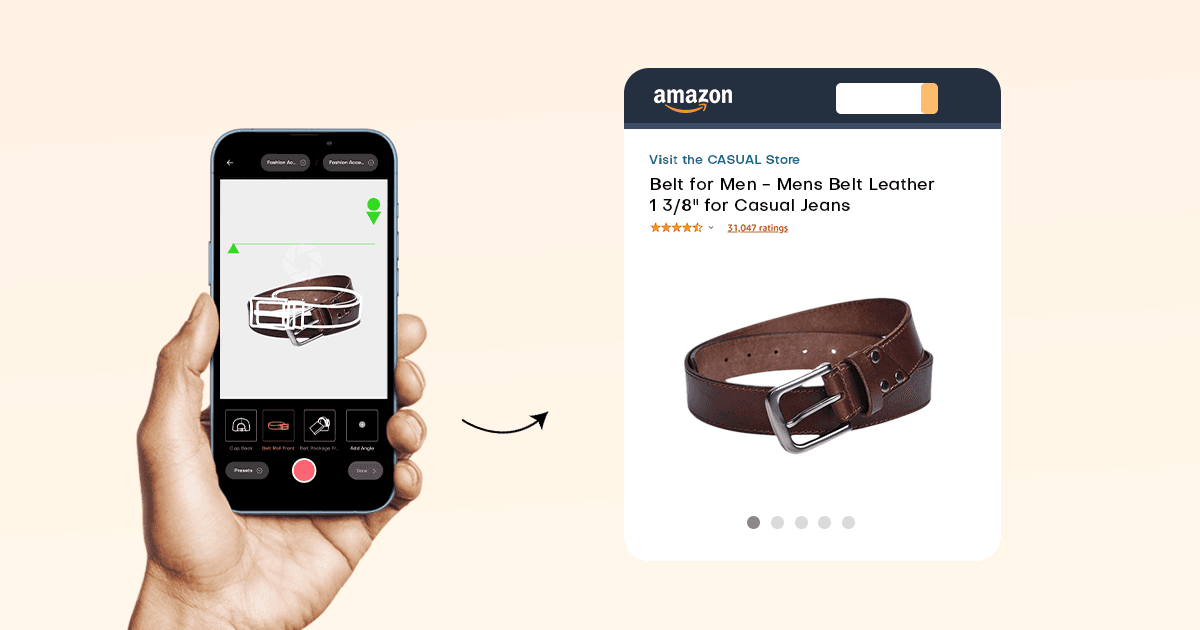
Your Amazon PPC campaigns are hemorrhaging money because your listing images suck. I see sellers dump $10,000+ monthly into advertising while their main image pulls a pathetic 0.8% CTR. That’s not a traffic problem. That’s an image problem.
Last reviewed:
Most sellers treat PPC and listing images like separate departments. Big mistake. Your advertising data tells you exactly what’s wrong with your photos. The Amazon PPC and listing images connection determines whether you’re scaling profitably or lighting cash on fire.
For more on this, see our amazon infographic images guide. For more on this, see our amazon listing optimization guide. Our amazon seller growth guide covers this in detail.
I’ve audited over 500 Amazon accounts. The pattern is always the same. High ACoS paired with mediocre images. Fix the images using PPC insights, and watch your ACoS drop 30-50% within 60 days.
Why Your PPC Data Is a Goldmine for Image Optimization
The Numbers That Actually Matter
Your Seller Central advertising reports contain the blueprint for better images. Here’s what to track:
- Impressions to Clicks (CTR): Below 0.5%? Your main image is the problem
- Clicks to Orders (CVR): Under 10%? Your gallery images aren’t closing the sale
- Search Term Reports: Which keywords drive clicks but no sales? Those reveal missing image elements
- Placement Performance: Top of search vs product pages tells you different image requirements
Pull your last 30 days of PPC data. Calculate your baseline CTR and CVR by campaign type. Sponsored Products campaigns averaging under 0.4% CTR need immediate main image intervention. That’s leaving 60%+ of potential clicks on the table.
The Hidden Cost of Bad Images in PPC
Let’s do the math on what crappy images actually cost you. Take a typical supplement seller spending $5,000/month on PPC:
| Metric | Bad Images | Optimized Images | Monthly Difference |
|---|---|---|---|
| CTR | 0.3% | 0.8% | 167% improvement |
| CPC (same bid) | $2.50 | $1.20 | $1.30 saved per click |
| Monthly Clicks | 2,000 | 4,167 | 2,167 more clicks |
| CVR | 8% | 14% | 75% improvement |
| Monthly Orders | 160 | 583 | 423 more orders |
| ACoS (at $30 AOV) | 104% | 28% | 76% reduction |
Same ad spend. Same keywords. Different images. That’s $12,690 in additional revenue from fixing your photos. Baymard Institute’s research on product image impact shows that unclear product photos account for 22% of cart abandonment.
Reading Between the Lines of Search Term Reports
Your search term report is screaming what’s wrong with your images. High-impression, low-click keywords indicate main image problems. High-click, low-conversion terms reveal gallery image gaps.
Example: You sell a yoga mat. The term “thick yoga mat 1 inch” gets 10,000 impressions but only 20 clicks. Your main image doesn’t show thickness. Add a side-angle shot showing the mat’s profile as your main image. Watch that CTR triple.
Download your search term report. Sort by impressions (high to low). Flag every term with CTR under 0.3%. Those keywords tell you exactly what visual information is missing from your main image.
Using Campaign Performance to Diagnose Image Problems
Placement Data Reveals Image Weaknesses
Amazon shows your ads in different locations. Each placement has different image requirements for success. Your placement report shows where images fail:
- Top of Search: Requires maximum visual impact at thumbnail size (200×200 pixels)
- Product Pages: Needs differentiation from competitor images
- Rest of Search: Must stand out among 48+ other products
If your top of search CTR is 0.2% while product pages hit 0.8%, your main image lacks thumbnail clarity. The image works when customers are already engaged (product pages) but fails in competitive search results.
Run this test: Create two Sponsored Products campaigns targeting the same keywords. Set one to “top of search only” and another to “product pages only.” Compare CTR after 1,000 impressions each. A 50%+ CTR gap means your main image needs thumbnail optimization.
Campaign Type Performance Gaps
Different campaign types stress-test different aspects of your images:
Sponsored Products: Pure image performance. Low CTR here = bad main image.
Sponsored Brands: Brand + image combo. Low CTR despite good SP performance = inconsistent brand presentation.
Sponsored Display: Retargeting performance. Low CTR = your images don’t create enough desire for return visits.
Track your CTR by campaign type over 30 days. If Sponsored Brands CTR is 50% lower than Sponsored Products, your lifestyle images don’t match your product images. Customers can’t connect the brand promise to the actual product.
Keyword Performance Tells You What to Shoot
Your converting keywords reveal which image angles matter. Non-converting keywords show what’s missing.
Real example from a kitchen gadget seller:
- “Dishwasher safe peeler” – 12% CVR → dishwasher image in gallery
- “Ergonomic peeler” – 2% CVR → no grip demonstration image
- “Peeler for arthritis” – 0.5% CVR → no ease-of-use imagery
The Amazon PPC and listing images connection is clearest in keyword-level data. Every search term represents a customer need. Your images either address that need visually or they don’t.
Step-by-Step Image Audit Using PPC Data
Phase 1: Data Collection (30 minutes)
Pull these reports from Seller Central:
- Search Term Report (last 60 days, all campaigns)
- Placement Report (last 30 days, Sponsored Products only)
- Targeting Report (last 30 days, break out by match type)
- Campaign Performance (last 90 days, include all metrics)
Export everything to Excel. Create a master spreadsheet with tabs for each report. You’re looking for patterns, not individual keyword performance.
Phase 2: Problem Identification (45 minutes)
Start with your main image diagnostic:
- Calculate overall account CTR (Clicks ÷ Impressions × 100)
- Filter for keywords with 1,000+ impressions and CTR under 0.3%
- Group these keywords by theme (size, color, feature, use case)
- The largest group reveals your main image’s biggest weakness
Example findings:
- 40 keywords mentioning “size” with low CTR = add size reference to main image
- 25 keywords about “color” underperforming = color isn’t clear in thumbnail
- 30 material-related keywords failing = texture not visible at small size
Phase 3: Image Optimization Priority List (30 minutes)
Rank image fixes by potential impact:
| Priority | Image Fix | Expected CTR Lift | Implementation Time |
|---|---|---|---|
| 1 | Main image angle/composition | 50-150% | 1 day |
| 2 | Add size/scale reference | 30-80% | 2 hours |
| 3 | Lifestyle context shot | 20-40% | 1 day |
| 4 | Comparison chart | 15-30% | 4 hours |
| 5 | Packaging shots | 10-20% | 2 hours |
Focus on main image first. Nielsen Norman Group’s eye-tracking studies show users spend 2.6 seconds evaluating product photos before deciding to click or scroll.
Main Image Optimization Based on CTR Data

The 0.5% CTR Threshold
If your main image CTR sits below 0.5%, you’re invisible on Amazon. Period. Here’s what moves the needle:
Background contrast: Pure white backgrounds work, but test light gray (RGB 245,245,245) for certain categories. Kitchen items and electronics often see 20-30% CTR lifts with subtle gray backgrounds.
Product angle: Your PPC data reveals the winning angle. Keywords focusing on specific features should match your main image perspective. “Wide mouth water bottle” keywords underperforming? Your straight-on shot hides the opening. Switch to a 45-degree angle.
Fill rate: Products should fill 85-90% of the image frame. Less wastes precious thumbnail space. More crops important details. Measure your current fill rate. Below 80%? You’re leaving CTR on the table.
Mobile vs Desktop CTR Gaps
Check your campaign performance by device type. Mobile CTR 40% lower than desktop? Your main image fails the smartphone test.
Mobile optimization requires:
- Higher contrast between product and background
- Bolder product positioning (centered, not artistic)
- Removal of subtle details invisible at 150×150 pixels
- Text overlays at 24pt minimum (if allowed in your category)
Test your main image on an actual phone. Can you identify the product in 0.5 seconds at arm’s length? If not, reshoot with mobile in mind.
Category-Specific CTR Benchmarks
Your CTR targets change by category. Here’s what good looks like:
- Supplements: 0.6-0.9% (clear labeling critical)
- Electronics: 0.7-1.2% (show the product in use)
- Kitchen: 0.5-0.8% (demonstrate the function)
- Beauty: 0.8-1.4% (before/after or texture shots)
- Tools: 0.4-0.7% (show what it does, not what it is)
Below category average? Your main image needs category-specific elements. Beauty products need texture. Tools need action. Supplements need clear ingredient callouts.
Gallery Image Optimization for Conversion Rate
The 7-Second Purchase Decision
Your PPC sends traffic. Your gallery images close sales. Low conversion despite decent traffic? Gallery images aren’t answering buyer questions.
Track which search terms convert poorly despite high clicks. These keywords reveal missing gallery images:
- “How to use [product]” searches = need instruction images
- “[Product] size” searches = need dimension comparisons
- “[Product] vs [competitor]” = need comparison charts
- “[Product] warranty” = need packaging/guarantee images
Every unconverted click costs you $0.50-3.00. A missing image that answers a common question bleeds money every single day.
Image Slot Strategy Based on Search Queries
Your image order matters. Analyze your top 50 converting search terms. Order gallery images to match search intent:
- Slot 2: Address the most common feature question
- Slot 3: Show scale/size (biggest conversion killer)
- Slot 4: Lifestyle or use-case image
- Slot 5: Close-up detail or texture
- Slot 6: Comparison or whats included
- Slot 7: Social proof (awards, certifications, reviews)
Reorder based on your specific search term data. Selling yoga blocks where “thickness” dominates searches? Slot 2 must show thickness comparison.
Testing Gallery Impact with Campaign Segmentation
Run this test to measure gallery image impact:
- Create two identical manual campaigns targeting your top 20 keywords
- Send Campaign A to your current listing
- Update gallery images based on PPC insights
- Send Campaign B to the updated listing (using a duplicate ASIN if needed)
- Run for 14 days or 2,000 clicks each
- Compare conversion rates
Most sellers see 20-40% conversion increases from gallery optimization alone. That’s pure profit from the same ad spend.
Creating PPC-Specific Image Variations
Sponsored Brands Video vs Static Performance
Your Sponsored Brands data reveals whether video beats static images. Compare CTR between video and static campaigns targeting identical keywords.
Video wins when:
- Product requires demonstration (CTR 2x+ higher)
- Multiple variants need showcasing (color/size options)
- Assembly or installation is a concern
- Texture or quality needs emphasis
Static wins when:
- Product is self-explanatory (simple items)
- Price is the main differentiator
- Brand recognition is strong
- Mobile traffic dominates (video loads slowly)
Don’t guess. Let your Amazon PPC and listing images connection data decide. Video costing more per click than static? Stick with photos.
A+ Content Images Driven by PPC Keywords
Your A+ Content images should address PPC keyword themes that don’t fit main listings. Pull your top 100 search terms by spend. Group into themes:
- Technical specifications → detailed spec charts
- Comparison searches → versus competitor tables
- How-to queries → step-by-step usage guides
- Quality concerns → manufacturing process images
A+ Content with PPC-aligned images increases conversion 15-30% on average. Generic lifestyle shots waste this premium real estate.
Dynamic Image Testing Through Campaign Structure
Set up systematic image testing using PPC:
- Create “Image Test” campaigns for your top 5 ASINs
- Use 10-20 exact match keywords per campaign
- Rotate main images weekly (keep gallery constant)
- Track CTR changes by image version
- Roll winning images to all campaigns
Document every test. Build an image performance database. After 6 months, you’ll know exactly which angles, backgrounds, and props drive clicks in your category.
ROI Calculation: Image Investment vs PPC Savings
The Real Math on Professional Photography
Let’s destroy the “professional photos are too expensive” myth with actual numbers.
Current state (bad images):
- Monthly PPC spend: $3,000
- Average CPC: $1.50
- CTR: 0.3%
- CVR: 8%
- Monthly orders from PPC: 160
- Cost per acquisition: $18.75
After professional images:
- Monthly PPC spend: $3,000 (same)
- Average CPC: $0.90 (better Quality Score)
- CTR: 0.7%
- CVR: 13%
- Monthly orders from PPC: 433
- Cost per acquisition: $6.93
That’s 271 additional orders per month from the same ad budget. At $40 AOV, you gain $10,840 in monthly revenue. Professional photography costs $400-2,000. Payback period: 3-7 days.
Hidden Savings Beyond Direct ROI
Better images compound savings across your business:
- Lower review impact: Bad images increase return rates 25-40%
- Reduced customer service: Clear images = fewer “not as described” claims
- Organic rank boost: Higher CTR/CVR improves Best Sellers Rank
- Defensive moat: Harder for competitors to steal sales with better images
Amazon’s own seller guidelines confirm that listings with professional images see 30% higher conversion rates on average.
When to Pull the Trigger on New Images
Your PPC data tells you exactly when to invest in new photography:
- Main image CTR under 0.5% for 30+ days
- Conversion rate 50% below category average
- PPC consuming 40%+ of gross margin
- New competitors with better images gaining rank
- Launching new variations or bundles
Stop waiting for the “perfect time.” Every day with subpar images costs you money. The Amazon PPC and listing images connection gets stronger as competition increases.
For more on this, see our increase amazon sales guide.
Advanced Implementation Tactics
Seasonal Image Rotation Based on PPC Trends
Your PPC data shows seasonal keyword shifts. Match images to seasonal demand:
- Q4: Gift-focused imagery, packaging shots, bundle displays
- Q1: New Year usage, organization, fresh start angles
- Q2: Outdoor lifestyle, spring cleaning, travel prep
- Q3: Back to school, summer activities, durability focus
Track search term variations by month. “Gift” searches spike 400% in November? Update slot 2 with gift-ready packaging shots. “Travel” keywords surge in May? Add compact/portable demonstration images.
Automate this with a simple calendar. Schedule image updates 2 weeks before seasonal shifts. Watch your relevance scores improve without touching bids.
Competitor Image Gap Analysis
Your PPC competitors reveal image opportunities:
- List your top 10 PPC competitors (who you bid against most)
- Screenshot their full image galleries
- Identify images they have that you lack
- Check if those image types correlate with their better performance
- Test similar (not copied) image concepts
If 8 of 10 competitors show size comparisons and you don’t, that’s why your “size” keywords underperform. Fix obvious gaps first, innovate second.
Multi-ASIN Image Consistency for PPC Efficiency
Running PPC across multiple ASINs? Inconsistent images tank performance:
- Use identical backgrounds across all variations
- Maintain consistent angle and lighting
- Create template positions for multi-packs
- Standardize lifestyle model demographics
Why this matters: Amazon’s algorithm learns from user behavior. Inconsistent images confuse both shoppers and the algorithm. Your Quality Score suffers. CPC increases. Profit disappears.
Build an image style guide. Document exact angles, lighting setups, and prop choices. Consistency alone can drop CPC 20-30% across catalog-wide campaigns.
Sources & References
Related Reading
- Amazon Image Optimization for Mobile: The Complete FBA Seller’s…
- How Many Images for Amazon Listing: The Complete 2024 Strategy Guide
- Amazon Before and After Images: How to Double Your Conversion Rate…
Related Reading
Related Reading
Related Reading
Related Reading
Related Reading
Related Reading
Related Reading
Frequently Asked Questions
How quickly will better images impact my PPC performance?
CTR improvements show within 24-48 hours of image updates. Conversion rate gains take 7-14 days to stabilize as Amazon’s algorithm adjusts. Full Quality Score benefits from the Amazon PPC and listing images connection materialize after 30 days of consistent performance.
Should I test new images on all campaigns simultaneously?
No. Start with your highest-spend single keyword campaign. Test for 500-1,000 impressions. If CTR improves 25%+, roll out to broader campaigns. This prevents tanking account-wide performance if an image unexpectedly underperforms.
What’s the minimum CTR I should accept before changing images?
Anything below 0.5% demands immediate main image replacement. Gallery images triggering sub-10% conversion rates after 100+ clicks need updates. Don’t wait for “more data” – you’re burning money every day with underperforming images.
How do I know if my images or my pricing is the conversion problem?
Run a 48-hour split test: drop price 15% without changing images. If conversion rate doesn’t budge significantly (less than 20% improvement), images are your bottleneck. If conversion jumps 50%+, you have a pricing problem. Most sellers discover it’s 70% images, 30% price.
Can I optimize images for PPC without professional photography?
You can improve garbage images to mediocre without professionals. But mediocre doesn’t win on Amazon anymore. DIY improvements might lift CTR from 0.3% to 0.5%. Professional product photography pushes you to 0.8-1.2%. That difference equals thousands in monthly profit.
Leave a Reply